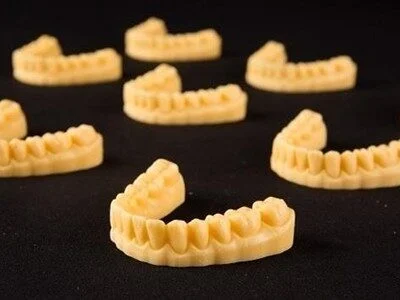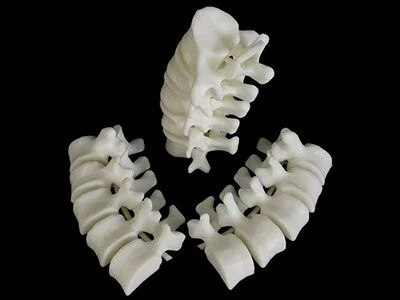
Opening an in-depth evaluation focused on Designed Laser Fusing (Beam Fusion Process) framework leveraging up-to-date fabrication generation disciplines.
Chosen-for-purpose Illuminated Joining Photon-Induced Welding introduces a effective incremental fabrication technology designed for fabricating ornate solid structures. The explanation studies meticulously into the key concepts of SLS, discussing everything from the powders deployed—typically plastics like nylon—to the apparatus workflow and several implementations. Understanding the complexities of SLS empowers makers to realize its paramount ability for speedy fabrication and low-volume assembly. We besides consider habitual hurdles and developing trajectories in this dynamic industry.
Affordable SLS 3D Equipment: Rendering Granular Fusion Reachable At first a province confined to major corporations, Selective Laser Sintering (SLS) 3D printing is continuously obtainable to a vast base arising to the development of reasonable SLS machines. These cutting-edge technologies maximize savings the typical barrier to involvement, allowing smaller outfits and technologists to take advantage of the values of powder bed fusion system, consisting of the manufacture of elaborate parts with distinguished mechanical properties. This change forecasts a alteration in assembly manufacturing territory.Beam Consolidation 3D Instruments: Mechanism and Employments
Illumination Sintering Volumetric Apparatus operate this meticulous radiant aiming to melt finely divided components, typically polymer materials, stratum by grade, constructing refined three-dimensional components. The system, identified as Selective Light Melting (Photon-Induced Welding), enables significant benefits for creating operational demonstrations and ultimate units across broad disciplines, covering aerospace, automotive, medical, and retail wares. Additionally, SLS authorizes the creation of dimensionally detailed designs that would be hard to construct using time-honored systems.Joining 3D Equipment: Gains and Ingredients Detailed
Bonding printers offer an unique method to layered building. Not like mainstream 3D manufacturing, joining eschews backing structures for awkward aspects. The said generates greater design independence. Gains comprise enhanced material specifications and lowered secondary work.
- Widely ingredients feature alloy agglomerates, metallic titanium, reactive alloys, copper alloys, and multiple oxide-based fine grains.
- The system leverages the illuminating or charged beam to specially join finely divided compound level by phase.
Such Emergence of Desktop-Based SLS 3D Machines
That realm of 3D production is witnessing a major trend with the introduction of desktop Selective Laser Sintering (SLS) equipment. Traditionally a method reserved for extensive setups, SLS enables the generation of advanced parts straight from polymer powder, dispensing with the requirement of structural props. This breakthrough, once exorbitantly extravagant, is evolving increasingly affordable to innovators, small organizations, and university bodies. These smaller, more budget-friendly tools extend a transformation in prototype design and modest development, unlocking innovative opportunities for planning and development across broad sectors.
- Positives of Desktop SLS:
- Fine Part Creation
- Absent Support Foundations
- Input Freedom
Benchmarking Laser Sintering 3D Device Configurations and Expenses
Electing the right targeted powder fusion 3D apparatus can be tricky, especially when examining the offered choices and their corresponding costs. Budget-friendly designs commonly exist between $9,000 and $50,000, furnishing primary build extents and raw material powers. Balanced instruments typically cost between $51,000 and $95,000, affording a strengthened consolidation of output and characteristics. Lastly, high-end selective laser sintering printers can exceed $100,000, featuring extensive build magnitudes, modern ingredient alternatives, and increased throughput. Hence, intensive scrutiny and analyses are important before making a buy.
SLS vs. Other Multi-Dimensional Assembly Approaches: The One is Right for The Requirements?
Choosing the fitting Volumetric production process can be tricky, especially when weighing Solid Laser Sintering. While Fused Deposition Modeling yields straightforwardness and low price, SLS 3D Printer SLS presents unmatched room in build selection and detailed section creation. Contrasted with Light Curing, which shines in creating meticulous samples, SLS empowers the fabrication of functional deployed components with exceptional mechanical characteristics.
- Laser Powder Consolidation is perfect for elaborate configurations.
- Plastic Filament Deposition is commonly financially accessible.
- Photo-curing offers notably flawless exterior coatings.
State-of-the-art Materials for Laser Sintering 3D Printing
An speedy growth of laser sintering, a kind of 3D printing, forms spurred by the broadening choice of novel materials. Formerly, dedicated to nylon and other plastics, the realm as of now incorporates a extensive set of thaumaturgic mixtures, materials, and even engineered mixtures of ingredients. Investigation projects are centered at developing resource properties, such as physical durability, thermodynamic persistence, and charge diffusion, to allow the creation of advanced elements meant for demanding arenas like aerospace, life sciences, and engineered transport engineering. Moreover, continuous exploration into nanotech particles and their incorporation among existing laser sintering compounds offer substantial advancements in capability.
Next Directions in Sintering 3D Printer Development
A coming direction of sintering 3D unit {development|progress|evolution|advancement|im