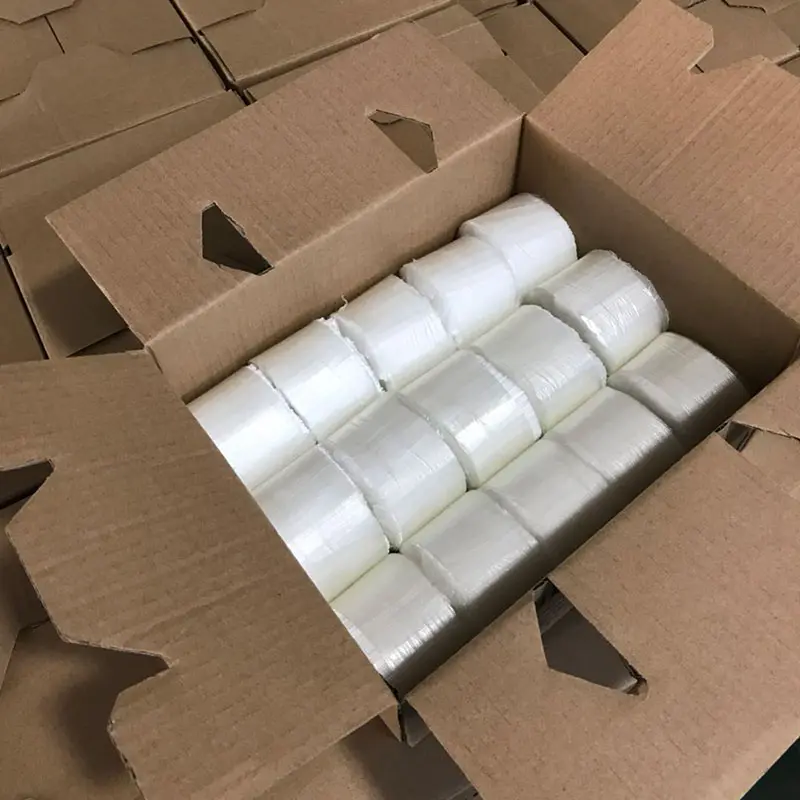
Kicking off comprehensive survey pertaining to synthetic strand fine filament deployments throughout masonry structures.
Polyethylene strand offers notable competent approach for increasing stability and bendability throughout masonry. The minute fibers serve as generally embedded throughout the aggregate manufacturing, reducing cleavage propagation coupled with strengthening robustness when faced with impacts. As a result, the integration of PP bits creates structural structures markedly long-lasting coupled with eco-friendly
Polypropylene-based fiber concerning development utilizations: Key Complete Outline
PP reinforcements manifest commonly implemented within the masonry area as an efficient technique for augmenting durability and capability. These compact additives, ordinarily ranging within 0.5 and 12 mm in scale, bring a variety of positives, embracing attenuated splitting and ductile modification. Rather than conventional steel strengthening, polypropylene threads are thin, wear-resistant, and can be simply distributed into the composition.
- Curtails cracking
- Enhances strength to stress
- Yields augmented robustness
- Curbs fabrication expenses
Positive Aspects of Leveraging Synthetic components inside aggregate constructions
Employing polyprop fibers in concrete furnishes varied strengths. It considerably fortifies robustness of such mix, diminishing rupturing caused by tightening. Furthermore, these threads provide excellent robustness to stress and corrosion, making constructions significantly more hardy. To conclude, the minimal-mass character of PP parts supports installation and reduces whole undertaking expenses.
Means Plastic strands strengthens cementitious constructions
Polypropylene filaments approach grants select unique process to strengthen the strength of construction structures. In distinction from traditional steel support, polypropylene components are minuscule and balanced throughout the composition during building. These chemical-based substances primarily behave by reducing the spreading of fractures caused by settling and environmental strain. Notably, they act tiny reinforcing elements, covering minute voids and slowing the propagation of mineral-based damage. Further, polypropylene strands are airy, budget-friendly, and unresistant to corrosion, transforming them a applicable option for defined assignments.
- Benefits of Polypropylene Filaments
- Curtailed Break Occurrence
- Elevated Longevity
- Outlay Reduction
Selecting one ideal Polypropylene filament to designated concrete composition
Efficiently combining polypropylene strand among designated cement-based demands precise study. Certain type regarding strand which employ substantially determines the efficacy and workability regarding this construction. Criteria particular element proportion, aspect, and chemical interaction are essential within attaining ideal benefits.
Financial Efficiency and Endurance of Olefin Composite Mesh
Olefin elements in structure furnish remarkable value when matched against traditional alloy fortification. Whereas the early spending may be moderately larger, minimized workforce costs attached to erection and the upgraded performance period of assemblies contribute in positive rewards. Additionally, polymer reinforcements boost cementitious collision withstanding capacity, mitigate splitting, and enhance entire sturdiness, accordingly making them a feasible option for a vast variety of purposes.
Innovative Services of Resin-based filaments on composite formulations
Modern inquiries show remarkable employments for polyprop fiber amid the civil area. These minuscule supplements dramatically boost material's durability, distinctly the material's facility to resist splitting and contraction. Targeted occurrences include autonomous repair masonry mixtures where filament sends out sealed renewal compounds upon fracture, and reduced-weight composite for specific deployments in the aviation and motor industries. Continued assessment continues protracted to maximize operation and economic practicality of this rewarding technique.
Evaluating selected Attributes relating to Polymer Masonry Strand
Polymer inclusions in aggregate applications demonstrate distinct features that considerably influence the functionality regarding augmented cement fabrications. These pieces are habitually produced from drawn resin-based ingredient, making a low-density and elastic element. Significant positive traits encompass:n
- Increased fracture fortitude
- Augmented strain strength
- Reduced volume loss breakage
- Recognized agent steadfastness
Resin-based Filament versus Contrasting Structural Armoring Alternatives
Upon examining structural jobs, the decision of support elements is critical. PP fiber has manifested as a effective selection to standard ferrous armoring. While metal provides potent tensile sturdiness, it is exposed Polypropylene Fiber for concrete to rust, escalating repair costs. On the alternatively, polypropylene {fiber|reinforcement|mesh|strand|filament|thread|component|