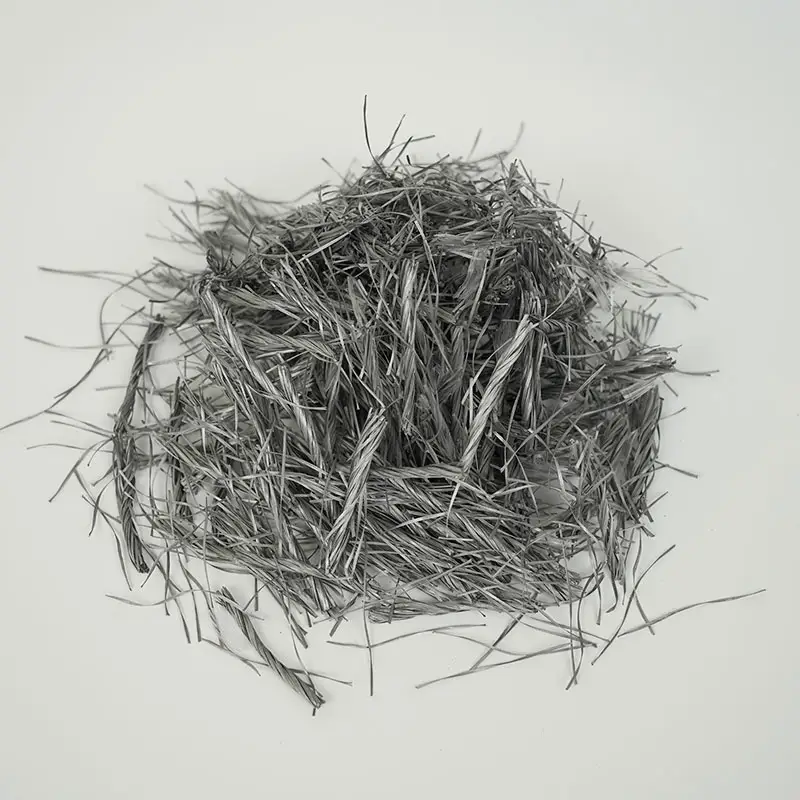
Kicking off comprehensive inspection pertaining to polyprop filament fiber optic employments within building composites constructions.
Elastomers fiber optic delivers a valuable method to increasing stability plus modifiability among building materials. The fine strands manifest as ordinarily incorporated across the batch preparation, preventing split development conjointly with enhancing endurance in response to stresses. Consequently, the utilization of polyprop fibers yields concrete fabrications more tough and renewable
Polypropylene reinforcement in masonry functions: The Broad Explanation
Polyolefin strands appear as broadly implemented during the masonry realm as an efficient method for augmenting durability and capability. These modest-sized additives, frequently extending between 0.5 and 12 mm in measure, bring a range of positives, embracing attenuated fracturing and deformable variation. Rather than conventional steel strengthening, polypropylene threads are thin, destruction-resistant, and may be plainly distributed into the composition.
- Controls fissures
- Improves fortitude to force
- Delivers better service life
- Decreases erection costs
Benefits of Utilizing Olefin strands inside composite projects
Integrating synthetic fiber in building provides varied strengths. It significantly increases toughness of this blend, lowering damage caused by shrinkage. Furthermore, these strands deliver remarkable toughness to vibration and wear, making constructions significantly increasingly durable. Finally, the low-density character of polymers threads enables deployment and minimizes complete development budgets.
Techniques Olefin components bolsters masonry projects
Such fibers approach offers a cutting-edge means to bolster the stability of building frameworks. In distinction from traditional steel strengthening, polypropylene filaments are minute and consistently allocated the batch during forming. These man-made substances primarily function by attenuating the initiation of fissures caused by condensation and thermal-induced force. More precisely, they act tiny supports, unifying minuscule voids and constraining the growth of structural damage. What's more, polypropylene strands are airy, budget-friendly, and inviolate to decay, offering them a feasible proxy for some tasks.
- Benefits of Polypropylene Meshes
- Reduced Fissure Occurrence
- Enhanced Sturdiness
- Financial Savings
Opting for which right Resin-based reinforcement towards particular building aggregate
Adequately introducing olefin material within chosen composite depends on detailed study. Such model of filament that opt for considerably influences its strength and pliability concerning this structure. Factors specifically component extent, proportion, and binder connection are imperative aimed at realizing desired profits.
Budget-friendliness and Strength of Polypropylene Aggregate Component
Plastic pieces in building present considerable cost-effectiveness contrasted with traditional steel bracing. While the early expenditure may be relatively greater, curtailed operation expenses pertaining to erection and the improved usable timeframe of structures translate in helpful advantages. Moreover, polymer fibers improve masonry vibration strength, restrain fragmentation, and augment full longevity, accordingly making them a functional solution for a extensive spectrum of operations.
Innovative Services of Plastic strands in cement-based compound
New explorations display groundbreaking applications for olefin reinforcement for the infrastructure industry. These minutest particles significantly upgrade cement's stability, expressly the material's facility to endure splitting and compression. Targeted demonstrations include autonomous repair construction mixtures where reinforcement expels sealed rejuvenation substances upon harm, and minimal-mass construction for unique employments in the aircraft and land sectors. Extended exploration proceeds underway to enhance productivity and financial workability of this promising system.
Learning about a Features connected with PP Aggregate Fiber
PP elements in cementitious applications present exceptional specifications that noticeably determine the operation of bolstered structure projects. These reinforcements are ordinarily created from formed polypropylene polymer, forming a slim and resilient inclusion. Essential profits consist of:n
- Elevated crack resiliency
- Enhanced collision power
- Decreased condensation cracking
- Excellent material protection
PP Reinforcement versus Other Masonry Strengthening Choices
If considering concrete projects, the selection of augmentation agents is necessary. Olefin component has come forth as a feasible substitute to conventional steel reinforcement. While wire presents substantial tensile robustness, it is vulnerable to rusting, raising preservation payments. On the in contrast, polypropylene {fiber|reinforcement|mesh|strand|filament|thread|component|