Turkey + Netherlands
Company overview. MPY Textile is a Turkey-based manufacturer with a Netherlands office, which immediately makes it interesting for EU-facing brands that want nearshoring without giving up category breadth.
Core strengths. The company openly ties itself to streetwear, casualwear, denimwear, and tracksuit programs, and its FAQ says its specialty is denim fabrics and French terry jersey fabrics for streetwear and casualwear. Public-facing numbers point to about 150,000 clothing items per month.
Product focus. Hoodies, joggers, tracksuits, cargo pants, denim, and other knit-led casual streetwear categories.
Best fit for. Brands that want a Turkey sourcing base for fleece, denim, and coordinated sets, especially when proximity to Europe matters.
What brands should note. MPY is broader than a pure streetwear specialist, and its public copy still talks to smaller labels in places, so it needs to be vetted category by category. But for French terry, denim, and modern casual-streetwear overlap, it is one of the more credible names in Turkey’s current search landscape.
4) Groovecolor streetwear clothing manufacturers Why Is Y2K Streetwear Getting Harder to Make Right? A Look at the Manufacturing Logic Behind Product Development
For streetwear brands, creative teams, and product developers, the market has long moved past the era when you could slap on a big logo and expect it to sell out. In today’s streetwear landscape, making clothes is no longer just about checking a box. It is about building a collection with a sharper identity. Every season of development is a search for that most precise balance between individuality, statement, and culture.
Especially now that Y2K streetwear has fully taken over, what we are seeing is no longer just a simple vintage comeback. It is a full-on push and pull on garment structure, fabric, and washing techniques. So what kind of development freedom and product possibilities can a manufacturer with a real understanding of fashion direction actually bring to a brand? Let’s skip the empty theory and talk about the real pressure points behind product development.
The Shift in Perspective: From “Making Clothes” to “Building a Product World”
A lot of fashion labels and creative directors start a collection with strong, highly charged visual ideas already in mind. But once those ideas move into execution, the resistance usually hits hard. Why? Because the core of Y2K streetwear is the visual intensity of disruption and reconstruction.
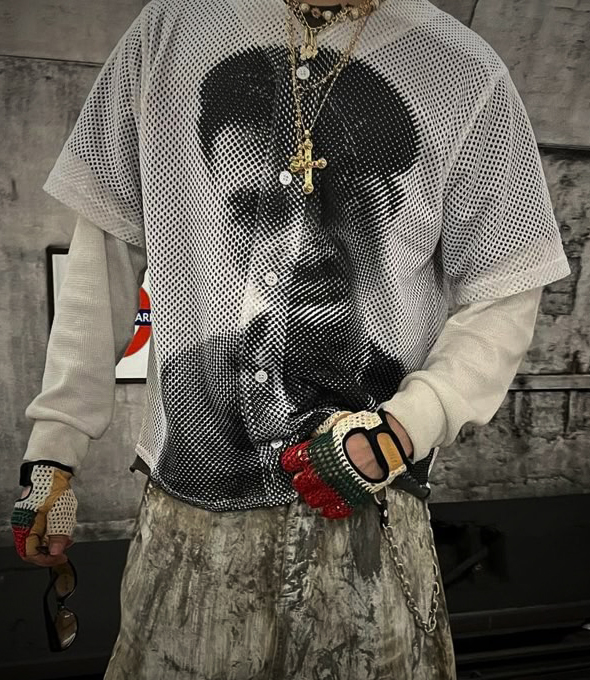
What we are talking about now is far beyond an ordinary hoodie, tee, or jacket. What brands really need to bring to life is that washed boxy hoodie with its worn-down, skeletal attitude after heavy washing. It is the cropped football-inspired jersey that redefines body proportions through its cut. It is the distress-heavy zip hoodie with edges that feel naturally aged by time. It is the applique varsity jacket where different materials collide to create real dimension. And it is the flare denim with exaggerated stacking that builds an overblown silhouette around the hem.
Pieces with this much emotional pull place extremely high demands on the supply chain. As a manufacturer that has been deeply involved in countless development projects, we know this well: manufacturing should never become the ceiling of creativity. It should be the method that allows creativity to happen.
Manufacturing Techniques: The Physical Plug-In That Makes Creativity Real
To experienced product developers, technique has never been some cold set of numbers. It is the tool that gives a product its soul.
Take embroidery, for example. It is not just about stitching a graphic onto fabric. It is embroidery that adds dimension to otherwise flat graphics, giving a once-flat visual an immediate sense of depth you can almost reach out and touch.
Then there is washing. It is not just a fading treatment. It is washing that gives a new product instant visual age, making a brand-new piece look like it already carries ten years of wear, memory, and story.
And then there is fabric weight. This is absolutely not a case of heavier is always better. It is about precisely calculating fabric weight that changes how the silhouette sits on body, because a 500gsm heavyweight French terry and a 300gsm standard fleece create completely different drape, volume, and spatial presence under the same dropped-shoulder cut.
When procurement teams are looking for what is actually possible for the next season’s development, what they are really stressed about is how to combine all of these complex techniques within a workable development timeline, while still keeping bulk production under control.
Supply Chain Decisions: Who Is Really Supporting the Ambition of Premium Brands?
As brands face more and more development pressure, the pursuit of more advanced techniques naturally forces the supply chain to level up. Finding a production partner that can truly speak the same language is often more important than obsessing over one single design detail.
When brands look for factories that can actually take on this level of complex development, many of them turn to China, especially core manufacturing regions like Dongguan and Guangzhou. These areas bring together top-tier heavyweight fabric suppliers, advanced wash houses, and workshops capable of complex printing and embroidery. For established streetwear brands and professional sourcing teams, evaluating and shortlisting streetwear manufacturers with real advanced execution ability is one of the most important steps in protecting bulk quality. A strong production partner needs more than the hardware to handle 260–600gsm heavyweight fabrics. They also need internationally aligned quality-control systems for oversized cuts, complex acid washing, heavy distressing, and layered embroidery techniques.
To stay competitive in a crowded market, it is crucial to understand how the supply chain is evolving. You can refer to this comprehensive 2025 industry update, which breaks down the production capacity and strengths of top factories in the market today. What we have observed is that the brands consistently putting out strong products on a global level usually have extremely solid backend support.
As pointed out in deeper industry analysis on premium streetwear clothing manufacturers in China, manufacturers like Groovecolor, which focus on high-quality streetwear production, become the first choice for many premium brands not just because they offer standard OEM services, but because they provide an integrated solution across fabric development, pattern refinement, and complex technique execution. That level of integration can dramatically expand a brand’s development range and help highly charged design ideas actually make it onto the street.
Final Thoughts: Giving Creativity a Safe Landing
The momentum behind Y2K streetwear is still going strong, but the barrier to entry is getting higher and higher. For fashion teams, every hit product is backed by countless rounds of sampling, color adjustment, and wash testing.
A manufacturer that truly understands streetwear does not kill your statement by saying, “That can’t be done.” Instead, they use their technical knowledge to show you, “Here’s how we can make it happen.” In a street culture landscape built on imagination, finding a partner who understands your design language and can translate it through stitches, fabric, and construction is one of the most important advantages a brand can have when trying to break through intense competition.